Gran Canaria Viewpoints: The Best Miradores & Views
A guide to the island's mountain, coastal and city lookout points
Gran Canaria's dramatic landscape has created dozens of official viewpoints, known locally as miradores. This guide covers the best ones inland, on the coast and in Las Palmas, with tips on when to visit and how to get there.
Overview: What Is a Mirador?
Gran Canaria is often called a "miniature continent" because of its dramatic relief. Within a very short distance, the island rises from sea level to almost 2,000 metres, so roads wind through tight bends across barrancos (ravines) and along crater rims. Along many of these routes, official viewpoints have been built, known locally as miradores. These are fixed, usually signposted spots with parking, often protected by a wall or railing. A mirador is different from a random photo stop by the roadside – it is part of the island's tourist infrastructure and is normally open all year round, free of charge.
Viewpoints Inland: The Cumbre and the Caldera de Tejeda
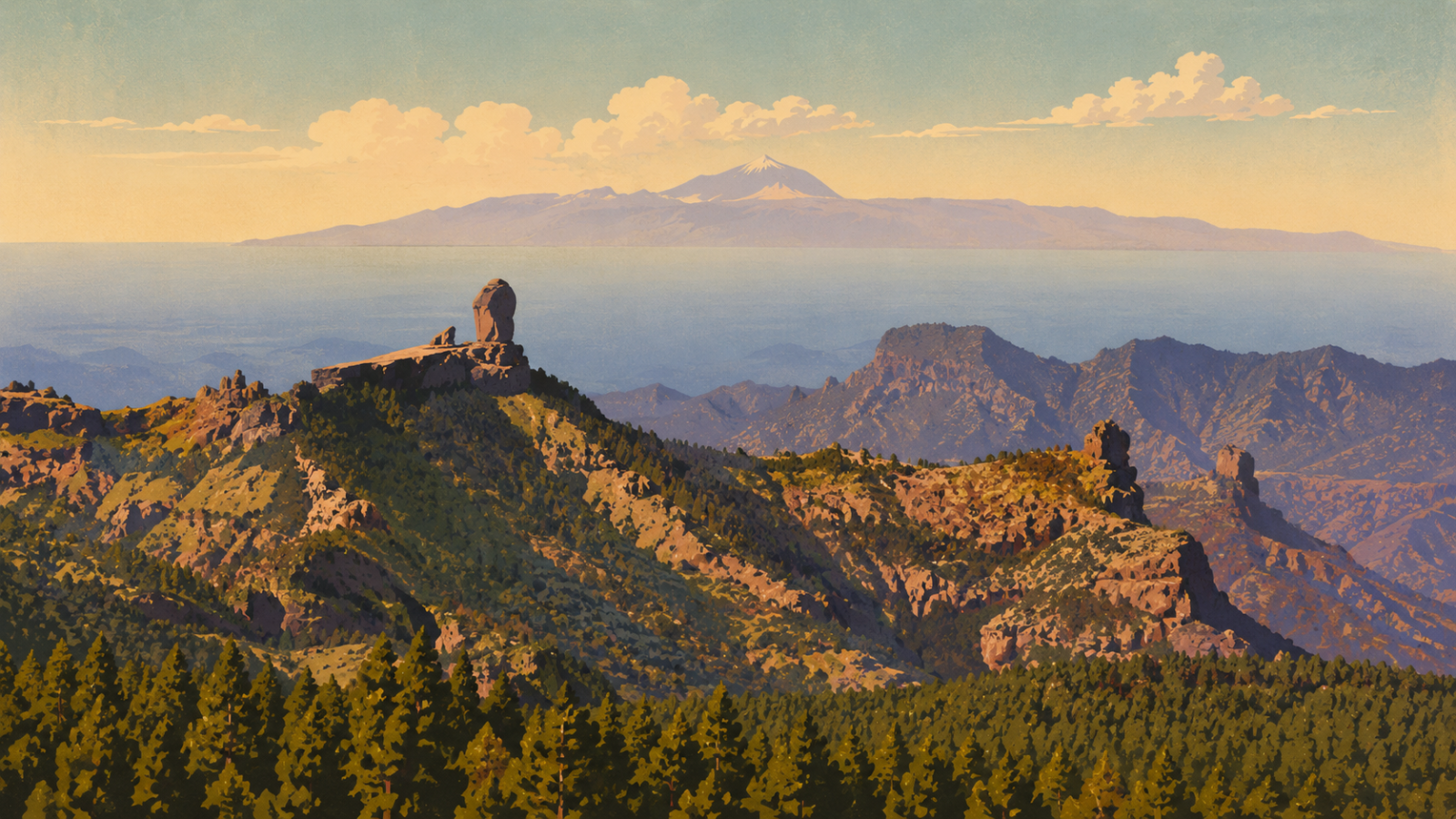
The mountainous centre of the island, around Tejeda, Cruz de Tejeda and Pico de las Nieves, has the highest concentration of viewpoints on Gran Canaria. Here you'll find miradores along the road between Cruz de Tejeda and Artenara, including Degollada de las Palomas and Pinos de Gáldar, as well as quieter spots such as the Mirador del Roque Palmés near El Toscón. Pico de las Nieves is one of the most visited viewpoints on the island. At around 1,949 metres, it is not the highest point on Gran Canaria – that title belongs to the neighbouring Morro de la Agujereada at 1,956 metres. Pico de las Nieves also does not offer a full 360-degree view: the open sightline runs from north-west to south-east, while the view to the north, north-east and east is blocked.
Viewpoints on the West Coast
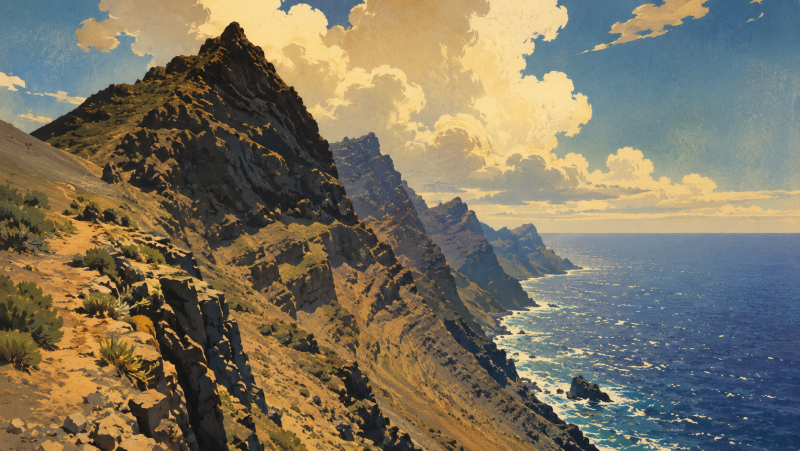
The west coast between La Aldea de San Nicolás and Agaete is one of the most dramatic stretches of the island. The Mirador del Balcón (also known as Andén Verde) has a glass platform that projects out over the cliffs. The hidden Mirador Llanos de la Mimbre, inside the Pinar de Tamadaba pine forest, opens up a wide view over the Barranco de Guayedra after a short walk, reaching as far as Puerto de las Nieves and, on a clear day, Mount Teide on Tenerife.
Viewpoints in the North
In the north, the Mirador de la Marquesa on the Montaña de Arucas is the main highlight. The road spirals around this extinct volcanic cone up to a viewpoint with a full panorama over Arucas, the north coast and, in good visibility, Las Canteras Bay and the La Isleta peninsula.
Viewpoints in Las Palmas de Gran Canaria
The capital itself is built largely on hills, which creates city viewpoints without the need to travel inland. These range from the cathedral tower above the old town to neighbourhood miradores in San Nicolás, San Antonio and San Juan, plus the hill above Confital beach, which looks out over the whole of Playa de Las Canteras.
Best Time to Visit and Visibility Conditions
How far you can see on Gran Canaria depends heavily on the weather. Clear conditions are most common in the morning, before clouds build up over the mountains later in the day. During temperature inversions, a striking "sea of clouds" often forms above roughly 1,000–1,500 metres, while towns along the coast sit under grey skies below. On the other hand, Calima (Saharan dust) can block the view towards Tenerife and Teide completely, sometimes for several days.
Getting There: Transport Connections
Most viewpoints inland, in the north and on the west coast lie outside the main Guaguas Global bus network. In practice, a hire car or an organised island tour is the most reliable way to reach them. Exact access routes and, where available, bus connections are listed on the individual pages for each mirador. The city viewpoints in Las Palmas are different: they can be reached on foot or by local Guaguas Municipales buses.
Nearby Attractions
| Attraction | Why visit |
|---|---|
| Natural Monuments of Gran Canaria | The volcanic landmarks and ravines you'll see from many of these viewpoints, explained in more detail |
| Top Sightseeing Spots in Las Palmas | Combine a city viewpoint with the old town, the cathedral and Las Canteras beach |
| Gran Canaria Places to Visit | A wider selection of towns and landscapes near many of the inland and west coast miradores |
Frequently Asked Questions
What does "mirador" mean on Gran Canaria?
Mirador is the Spanish word for an official, signposted viewpoint, usually with parking and safety features such as a wall or railing.
Is Pico de las Nieves the highest point on Gran Canaria?
No. Pico de las Nieves sits at around 1,949 metres. The highest point on the island is the neighbouring Morro de la Agujereada, at 1,956 metres.
Do you need a hire car to visit the inland viewpoints?
For most miradores inland, in the north and on the west coast, yes. They lie outside the regular bus network and are best reached by hire car or as part of an organised island tour.
When is visibility best on Gran Canaria?
Mornings are usually the most reliable time, before clouds build up over the mountains during the day. Calima (Saharan dust) can reduce visibility significantly for several days at a time.
Are the viewpoints free to visit?
Yes, all the miradores listed on this page are freely and permanently accessible at no charge.